recipe
Tajadas: Venezuelan fried ripe plantains
Golden slices of ripe plantain for pabellón, with clear ripeness cues, a consistent cut and help for slices that brown too quickly.
AI editorial review: 2026-10-22
Researched recipe; not cooked or tested by Culinara.
Jump to ingredients and methodPrint using your browser’s Print command.
Ingredients and method
About 4 side portions from 2 large plantains
Ingredients
- 2 large ripe plantains: yellow with extensive black patches, yielding slightly when pressed
- Neutral frying oil, such as canola or corn oil, enough for a 1/4-inch layer in your skillet
Method
- Rinse and dry the whole plantains. Cut off the ends and make a shallow slit through the skin along the length. Peel, then cut each plantain crosswise in half. Slice the halves lengthwise into pieces about 1/4 inch thick. Long diagonal slices of the same thickness are another workable shape.
- Put a 1/4-inch layer of oil in a heavy skillet over medium heat. Have a plate lined with paper towels and a slotted spatula ready. Aim for about 350°F if using an oil thermometer; the oil should shimmer but not smoke.
- Lower a few dry slices carefully into the oil, away from you. Keep them in one layer with room to turn. Fry until the underside is golden to deep amber, then turn gently. Start checking after about 2 minutes on the first side; ripeness, thickness and heat will change the time.
- Cook the second side until browned and the center feels soft when pressed gently with the spatula. If the surface darkens while the middle remains firm, lower the heat. Transfer to the lined plate to drain, and repeat with the remaining slices, adjusting the heat between batches.
- Serve warm with rice and beans or pabellón. Let the oil cool completely before handling it for disposal.
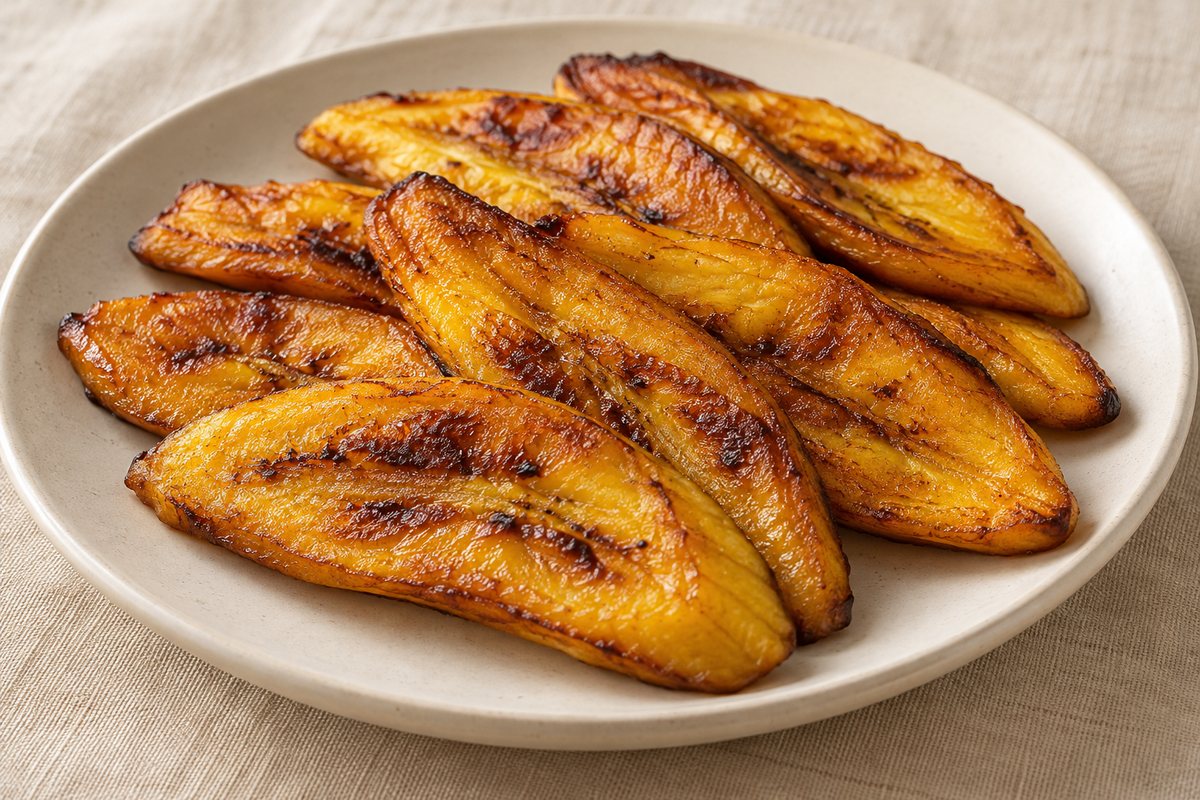
AI-generated illustration: Original AI depiction of ripe plantain slices fried until golden and lightly caramelized. Thickness may differ from the written method.
OpenAI · Usage terms
Image details
Uncropped proportional downscale from saved original PNG to 1200px maximum JPEG, quality-optimized.
Buy ripe plantains for this version
A green plantain is starchy and firm. For tajadas, choose a yellow plantain with abundant black markings and a little give beneath the skin. Very soft fruit can still be sweet, but slices are harder to lift intact. Discard fruit with mold, leaking spoilage or an off smell.
These are cooking plantains, sometimes labeled plátano macho in US stores. A dessert banana is softer and does not behave the same way in the skillet. If the store only has firm green plantains, allow them to ripen before attempting this recipe.
Sources: [3]
Plain slices, browned by their own sugar
The tajadas in Díaz’s pabellón use ripe plantains and oil; Romero’s bowl recipe also fries thin plantain slices. This recipe follows that plain accompaniment. It does not use the cinnamon, butter and extra sugar found in some other sweet-plantain preparations.
A roughly even thickness matters more than matching an exact length. Thin tips brown first, so keep an eye on them and remove smaller pieces early. A browned exterior with a tender center is the goal; a crunchy chip is a different preparation.
When the frying goes wrong
If the oil smokes, take the skillet off the burner briefly and reduce the heat. If a full batch barely bubbles and becomes oily, the pan may be crowded or the oil too cool. Fry fewer slices at once and let the oil recover between additions.
Ripe slices are delicate. Slide a spatula fully underneath before turning instead of pinching the center with tongs. Dry the fruit and equipment well; water entering hot oil can spatter. Keep the skillet stable and never pour water into hot frying oil.
Sources: [2]
Serving later
Freshly fried tajadas have the best contrast between browned edges and soft centers. Refrigerate leftovers promptly in a shallow covered container within 2 hours, or 1 hour above 90°F. Keep at 40°F or below and reheat to 165°F. They will be softer after storage.
Sources: [4]
Research sources
- Jani Díaz, Laylita — Pabellón criollo venezolano (Spanish) (checked 2026-10-22)
- Oriana Romero — Venezuelan Pabellon Bowl (checked 2026-10-22)
- Oriana Romero — Venezuelan Sweet Plantains (checked 2026-10-22)
- FDA — Safe Food Handling (checked 2026-10-22)