recipe
Tequeños: Venezuelan cheese wrapped in crisp dough
Crisp fried spirals filled with firm white cheese; learn which cheeses hold their shape and how to seal the dough without leaks.
AI editorial review: 2026-10-22
Researched recipe; not cooked or tested by Culinara.
Jump to ingredients and methodPrint using your browser’s Print command.
Ingredients and method
About 12 cheese sticks
Ingredients
- 1 1/2 cups all-purpose flour, plus a little for rolling
- 3/4 teaspoon kosher salt (use less if the cheese is very salty)
- 2 tablespoons unsalted butter, melted and cooled
- 1 large egg
- 3 tablespoons room-temperature water, plus more by the teaspoon as needed
- 8 ounces firm queso blanco or queso de freír, cut into twelve 3-inch-long batons around 1/2 inch thick (halloumi is an alternative)
- Neutral high-heat frying oil, enough for a 2-inch depth in a heavy pot
Method
- Whisk the flour and salt in a bowl. Make a well and stir in cooled melted butter, the egg and 3 tablespoons water. Bring the dough together; if powdery, add water a teaspoon at a time. Knead a few minutes until smooth, then cover and rest 20 minutes.
- Pat the cheese dry. Cut twelve sticks about 3 inches long and 1/2 inch wide. A firm cheese labeled for frying holds better than soft, high-moisture mozzarella.
- Roll the dough on a floured surface into a thin sheet about 1/8 inch thick. Cut roughly twelve strips about 1 inch wide and long enough to wind from one end of a cheese stick to the other. If dough pulls back, rest it another five minutes.
- Wrap each stick on a diagonal, overlapping successive turns without exposing gaps. Fold dough securely over both ends and press seams together. Patch any thin spots or pinholes so the cheese stays inside the hot oil.
- Heat oil in a sturdy, deep pot to about 350°F. Keep the oil below half the pot height. Lower a few tequeños carefully into the oil and fry until evenly golden, turning as needed. If cheese starts leaking, take that piece out and check the next wraps for openings.
- Drain on a rack or paper-towel-lined tray and rest a few minutes before serving; the center will be very hot. Use a thermometer when available and never add wet cheese or water to hot oil. Let the oil cool fully before handling for disposal.
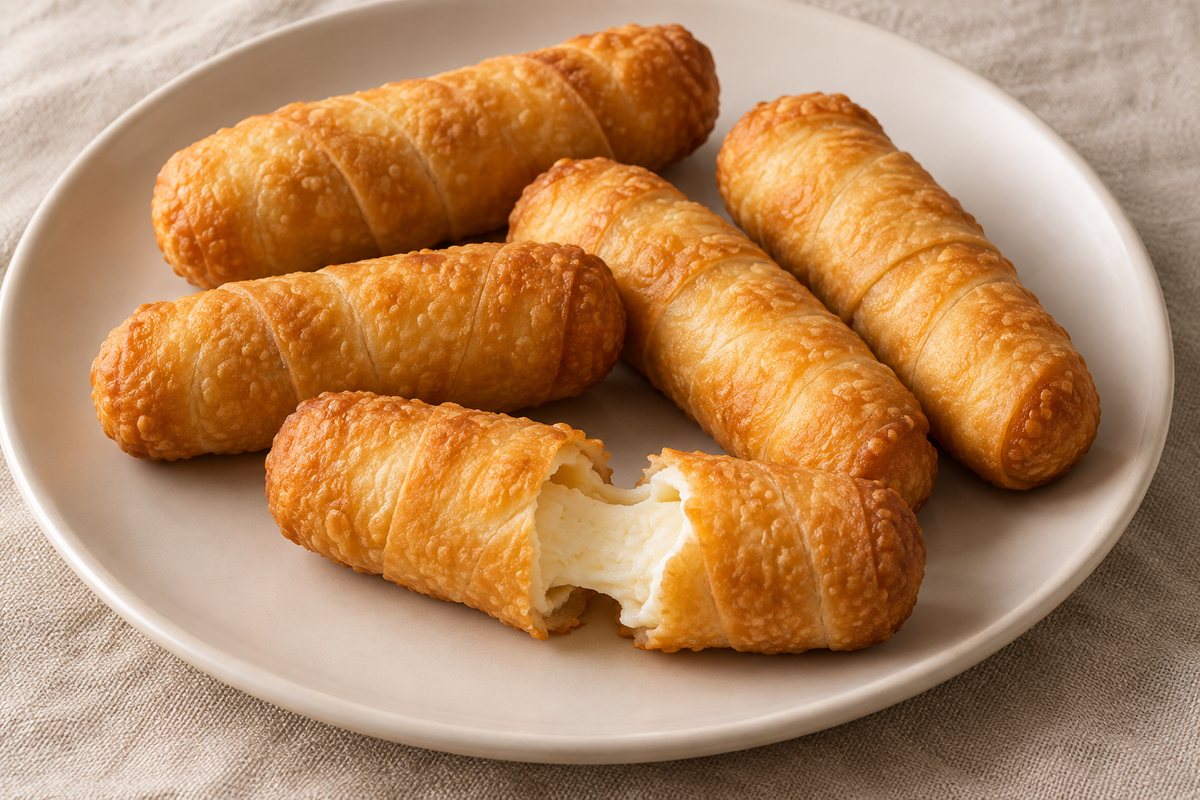
AI-generated illustration: AI depiction looks puffier than the hand-wrapped dough described in the recipe; serving variation, not a photograph or precise step illustration.
OpenAI · Usage terms
Image details
Uncropped proportional downscale from saved original PNG to 1200px maximum JPEG, quality-optimized.
Choose cheese by its melting behavior
Queso blanco made for cooking, queso de freír or halloumi can retain a distinct center. Soft fresh cheese, shredded mozzarella and very salty mature cheese behave differently; a substitute changes the result. Look for firm blocks you can cut into 3-inch sticks.
Sources: [1]
Cover the ends, not just the sides
Tequeños have a tightly wound strip of dough around a cheese baton. Dough gaps, open ends and poorly sealed seams give the cheese an exit as it warms. Keep waiting wraps covered to prevent drying.
Fry patiently and safely
Keep a modest batch in the pot so the oil does not cool sharply, avoid crowding, and allow the crust to brown without smoking. The listed frying temperature is a researched starting point, not a measured Culinara trial.
Sources: [1]
Serving and storage
These are best just fried, with a few minutes of cooling to protect against molten cheese burns. Refrigerate perishable leftovers promptly, within 2 hours (1 hour above 90°F), and reheat thoroughly.
Sources: [3]
Research sources
- Ananda Eidelstein, The Kitchn — Tequeños (Venezuelan cheese sticks) (checked 2026-10-22)
- Beryl Shereshewsky — Tequeños, Venezuelan home-cooking contributor (checked 2026-10-22)
- USDA FSIS — Leftovers and food safety (checked 2026-10-22)